Five Fish That Define the Last Frontier of Alaska
 Prev Post
The Icons of Alaska’s Waters
When people imagine Alaska, they often picture mountains, glaciers, and endless wilderness — but beneath the surface of its rivers and lakes swims another treasure: some of the most spectacular game fish on the planet. From the ocean-charged silver salmon to the delicate Arctic grayling, Alaska’s freshwater ecosystems are alive with opportunity, adventure, and wild beauty.
These five species — Silver Salmon, Rainbow Trout, Dolly Varden, Northern Pike, and Arctic Grayling — are the heart and soul of Alaskan angling. Each offers a unique experience, a different story, and a reason thousands of anglers journey north every year. Whether you’re fly fishing a crystal-clear tributary in the Upper Nushagak River or casting a spoon into a weed-choked backwater, these fish represent the diversity and richness that make Alaska’s waters legendary.
Silver Salmon — The Acrobat of the River
Of all Alaska’s salmon, silver salmon (Oncorhynchus kisutch) are the most celebrated among fly fishers and light-tackle enthusiasts. Known for their explosive fights and leaping displays, silvers embody the perfect mix of aggression and beauty.
Silvers arrive in Alaska’s rivers from the ocean in late July through September, their bright chrome sides glinting like liquid steel. Once they hit freshwater, they become fierce competitors, slamming flies, spinners, and jigs with reckless abandon. On rivers like the Nushagak, Togiak, and Naknek, anglers can encounter dozens of fish in a single day.
Silvers average 8–12 pounds, with some topping 15 or more. They often strike near the surface, and once hooked, they’ll cartwheel through the air, stripping line in dazzling bursts. Fly anglers love them for this — few species deliver such raw energy on a 7- or 8-weight rod.
But beyond their athleticism, silver salmon are vital to Alaska’s ecosystems. When they return to spawn, they bring ocean nutrients into freshwater systems, feeding everything from bears and eagles to moss and microorganisms. Every silver salmon that leaps through a river’s current is both a thrill and a thread in Alaska’s intricate ecological web.
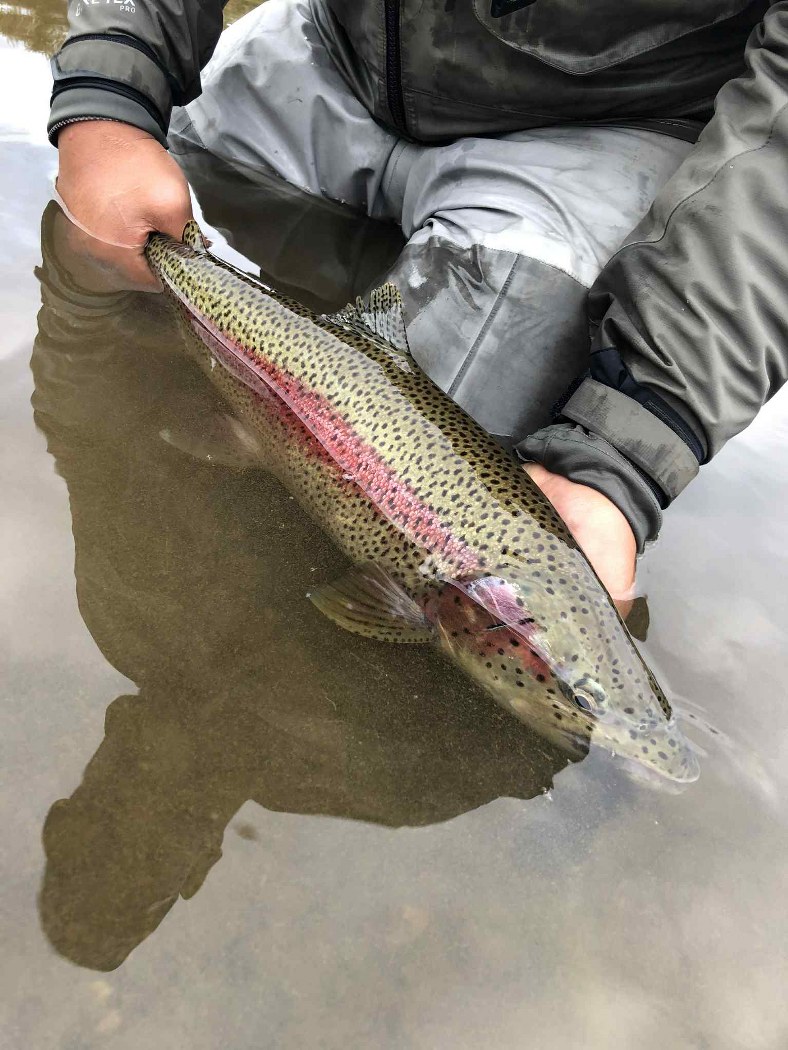
Rainbow Trout — The Wild Jewel of the North
Ask any angler what draws them to Alaska, and most will mention the rainbow trout (Oncorhynchus mykiss) — not just for their beauty, but for their power. Alaska’s rainbows are truly wild fish, descendants of ancient lineages untouched by hatcheries or stocking.
Found throughout the Bristol Bay watershed, especially in rivers like the Nushagak, Kvichak, and Naknek, Alaska’s rainbow trout are world-renowned for their size and spirit. These fish thrive in clear, cold waters rich with salmon runs — and where there are salmon, there’s food. During the spawning season, trout gorge on loose salmon eggs, creating the famous “egg bite” that attracts fly anglers from around the world.
The biggest rainbows in Alaska often reach 30 inches or more, their bodies thick, their colors shifting from silvery chrome to deep crimson stripes depending on the season. They’ll take streamers, flesh flies, beads, or even mouse patterns skated across the surface — producing some of the most heart-stopping strikes in freshwater fishing.
To catch a rainbow trout in Alaska isn’t just a fishing achievement — it’s a connection to the purest form of the species, a glimpse into what wild trout fishing once was everywhere else.
Dolly Varden — The Painted Wanderer
Few fish can match the Dolly Varden (Salvelinus malma) in sheer visual beauty. A member of the char family (related to brook trout and Arctic char), Dollies are adorned with a palette of colors that seems borrowed from an artist’s brush: olive-green backs, bright red bellies, and glowing orange spots.
Dolly Varden are both anadromous (migrating between salt and fresh water) and resident, and they are found in nearly every major river system along Alaska’s coast. In places like the Upper Nushagak, they’re a frequent companion to anglers targeting trout or salmon.
What makes Dollies special is their adaptability and willingness to bite. They’ll smash a drifting egg pattern below salmon redds, chase streamers swung through deep runs, or sip a small dry fly in crystal-clear creeks.
In the early 20th century, Dollies were misunderstood and even maligned — commercial fishermen blamed them for eating salmon eggs and fry. Thankfully, scientific research proved their ecological value, and today they’re rightfully celebrated as one of Alaska’s most spirited light-tackle species.
A big Dolly Varden, brilliantly colored in autumn spawning dress, is among the most photogenic fish you’ll ever hold — and one of the most satisfying to catch.
Northern Pike — Alaska’s Freshwater Predator
Step away from the salmon rivers for a moment and into the quiet backwaters, sloughs, and lakes of interior and western Alaska, and you’ll find an entirely different kind of gamefish: the northern pike (Esox lucius).
If silver salmon are acrobats and trout are tacticians, then pike are pure predators. They lurk motionless in weedy shallows, waiting for the perfect moment to strike — and when they do, it’s an explosion of teeth, speed, and power.
Pike are native to Alaska’s freshwaters and thrive in areas like the Nushagak drainage, where side channels and oxbow lakes offer perfect ambush territory. They can grow enormous here — 40-inch fish are not uncommon, and specimens over 45 inches (20–25 pounds) have been recorded.
Fly anglers pursue them with oversized streamers, topwater poppers, and even mouse or frog imitations. The strike is violent, the fight intense, and the adrenaline unforgettable. Pike fishing in Alaska has grown in popularity as anglers discover the thrill of targeting these apex predators with a fly rod.
But beyond sport, northern pike are a vital part of Alaska’s aquatic ecosystem. As top predators, they help regulate populations of smaller fish, maintaining a natural balance. Whether you’re chasing them in a remote tundra lake or the back bays of the Nushagak, northern pike remind you that Alaska’s freshwater world is as wild as it gets.
Arctic Grayling — The Spirit of Alaska
Elegant, ancient, and deeply symbolic of Alaska’s wilderness, the Arctic grayling (Thymallus arcticus) is the fish that many first-time anglers fall in love with. Known for their distinctive sail-like dorsal fin and shimmering colors, grayling epitomize the grace and purity of Alaska’s smaller streams and headwaters.
Grayling thrive in cold, clean water — often in places too shallow or too remote for larger species. They can be found throughout interior Alaska, including the upper tributaries of the Nushagak River, where clear creeks and spring-fed channels provide ideal habitat.
On light tackle or fly gear, grayling are pure joy. They rise eagerly to dry flies, often leaping from the water to intercept them, and their fight — though not as powerful as a trout’s — is spirited and constant. Patterns like Adams, Elk Hair Caddis, and small nymphs all work, making them perfect targets for beginners and purists alike.
Catching a grayling in Alaska feels timeless — as if you’ve stepped back to an era before cities, before pressure, before time itself. In many ways, they are the soul of Alaska’s rivers — humble, beautiful, and enduring.
The Tapestry of Life in Alaska’s Waters
What ties these five species together isn’t just geography — it’s the ecosystem they share and the rhythm of Alaska’s seasons.
Each summer, salmon return from the ocean, transforming rivers into corridors of life. Their eggs and decaying bodies feed rainbow trout, Dolly Varden, and grayling. The surge of biomass ripples outward — bears feast, eagles soar, and the forest itself absorbs the nutrients of the salmon run.
In the slower backwaters, northern pike lurk, embodying the wild predatory energy that defines Alaska’s untouched ecosystems.
Together, these species form a perfect mosaic — predator and prey, resident and migrant, saltwater and freshwater. The balance among them sustains one of the richest aquatic systems on Earth.
Why Anglers Keep Returning
Every summer, anglers from around the world travel thousands of miles to cast into Alaska’s rivers. Some come for the fight of a silver salmon, others for the elegance of a grayling rise. Some seek trophy trout, others the thrill of a topwater pike strike.
But all share a common drive: to experience something pure. In a world increasingly tamed and fenced, Alaska remains untamed — a place where fish still migrate by instinct, where rivers still run free, and where the angler’s reward isn’t just a catch, but a connection.
On the Upper Nushagak River, near the village of Koliganek, operations like Nush Dreams Adventure continue that tradition — guiding anglers into one of the last true frontiers of fishing. Here, every species tells part of Alaska’s story, and every cast adds a new line to it.
Final Thoughts: The Call of the Wild Water
To fish Alaska is to step into something primal — a meeting between human patience and wild persistence. Whether you’re holding a silver salmon fresh from the ocean, admiring the crimson hues of a Dolly Varden, or watching the gentle rise of a grayling at dusk, you’re participating in something ancient and sacred.
Each fish you encounter — each flash of silver, each surge of color — represents not just a species, but a story. Together, Silver Salmon, Rainbow Trout, Dolly Varden, Northern Pike, and Arctic Grayling form the living, breathing identity of Alaska’s rivers.
They are not just fish — they are the lifeblood of the Last Frontier.
And for those who come to cast a line in these waters, they are also a reminder of what it means to feel alive.



Quick Links
Copyright © 2025 Nush Dreams Adventure. Website by JZ Internet